Wednesday, February 29, 2012

My Experience with Huck Finn

1. Have you read the novel before? If so where and why?

Surprisingly I don't think I've read a single one of the books covered in this class before. How do you make it through high school without reading The Adventures of Huckleberry Finn and To Kill a Mockingbird you may ask? I don't know. Maybe some day I'll write a step by step instructional guide. For now just sit in wonder.

2. If you have not read Huck Finn before, surely you know something about the novel and character from references and allusions in popular culture. What do you know about either the novel and/or character?

Because I hadn't read either The Adventures of Tom Sawyer or The Adventures of Huckleberry Finn, my vague understanding of Mark Twain novels prior to this class was a confusing amalgamation and bastardization of both novels. I was legitimately surprised when I had reached Chapter 10 of this novel and no one had mentioned hide nor hair of painting picket fences white.

I guess The Adventures of Tom Sawyer is more prevalent in popular culture because the two things that came to mind when I initially thought about Huck Finn were actually references to Tom Sawyer. One was this guy's face.

Jonathan Taylor Thomas played Tom Sawyer in 1995's Tom and Huck

And the other was a joke by Daniel Tosh:

"I'm actually all for gay marriage. Just the thought of having a man around the house, means I'll actually get some work done. C'mon, we've got chores this weekend... we're painting fences...I’m dating Huck Finn in this joke. He’s a Gemini. We’re compatible."


6. Huck Finn is still one of the most controversial and most banned books in America. Why is it so controversial?

I imagine it's because it uses the n-word so much.

Cotton McKnight: I'm being told that Mark Twain will be using the n-word 219 times in his novel.
Pepper Brooks: It's a bold strategy, Cotton. Let's see if it pays off for him.

7. Is Huck Finn still relevant to you as a college student today? Should it continue to be taught in college classrooms?

Definitely. While slavery isn't exactly a contemporary issue, I think slavery in the novel is merely the lens through which Twain explores greater thematic issues such as freedom, humanity, conscience, etc. I found reading the book to be a particularly eye-opening experience.

8. The general consensus among critics is that Huck Finn is a brilliant and powerful novel, but also a flawed and problematic novel. What do you think might be flawed and/or problematic about the novel?

I like to think that I answered this question in longer form with my previous blog, but I'll summarize my views here. I think the fact that the novel was written in a piecemeal fashion really hurts its impact. You definitely feel the division between the three basic parts of the novel, and the final product feels disjointed. The novel's ending is also a major weak point. It's problematic because it not only shifts the focus to Tom Sawyer and his elaborately wacky antics that become tiresome, but it also puts Jim and Huck on the backburner and serves to negate the importance of their adventure for freedom and their character growth as well.


EMERGENCY CUTENESS BELOW

Monday, February 20, 2012

The Adventures of Huckleberry Finn

"I have never let my schooling interfere with my education."
- Mark Twain

Whenever I'm asked about my favorite quote, the answer I almost always give is that little gem. It's a simple quote yet there's a lot of information to chew on in there. I really enjoy it because sometimes I let my schoolwork run my life, which is stressful.

School? Nah son.

Alright. The Adventures of Huckleberry Finn. Pretty chill book, yeah? I thought so. Here's why:

Over the past week and a half I've been reading The Adventures of Huckleberry Finn in small increments and my overall experience with the book has been a mixed bag. There's a lot of duality in my reaction to The Adventures of Huckleberry Finn. While I really enjoyed some particularly thought-provoking quotes from the book that I still haven't fully finished reflecting on, I didn't care for the fact that by the end of the book the events that took place were all for naught.

I think Huck Finn as a character is fantastic. He's a humorous character with an enjoyable personality. I felt sympathy for Huck pretty much from the get go, in part due to his victimization as a result of Pap's alcoholism. Huck is the vehicle for some of my favorite quotes from the book. In class we touched on Huck's statement "I don't take no stock in dead people." I still haven't actually finished contemplating that notion yet. It was mentioned in class that by adopting this approach to life, Huck has drastically limited his capacity for knowledge; Huck has made the entire wealth of human knowledge over the course of history unattainable. When you couple his outlook on the past with the way he views humanity in the present, Huck becomes a very sad and isolated character. In his adventures, Huck encounters robbers, con artists, racists, and angry mobs which all serve to disillusion him. He learns that the world is not a nice place and at times is sickened by humanity.

Another of Huck's quotes that have really stuck with me is "All right, then, I'll go to hell." That moment in the book is really powerful because in a book filled with several incidents of racism, it's moving to see tolerance prevail. Additionally, the quote is sort of a turning point in Huck's character arc. It's at this point that Huck finally decides to forego the societal and conventional norms that held him down. Previously, Huck was victim to fact that he was "bad" and acted poorly simply because people thought he was indeed "bad". It was a gratifying moment in the novel to see Huck act due to his own conscience instead of society's view of morality.

However, while this moment in the book is an enjoyable one, I feel like Twain goes out of his way to negate the impact of this event (and many others in the book) making it inconsequential. For example, Huck continually struggles with the moral ambiguity present in freeing a slave; while slaves are living, breathing, thinking people with thoughts and feelings they are also someone's property. Similarly, while Huck changed and learned a lot about himself through his travels I feel like Twain undoes much of Huck's character development in the last couple chapters of the book. Towards the end of The Adventures of Huckleberry Finn, Tom Sawyer comes back into play and takes over the whole show. Once Tom Sawyer returns to Huck's life, his actions become trivial and boyish once again.

In my Survey of Theatre class we recently learned about the origin, meaning, and implementation of deus ex machina. Although the term originated from Greek theatre, Twain could have fooled me into thinking he invented the damn thing. What is that you say? Miss Watson had actually freed Jim the whole time? Seems legit. The way in which Twain concludes The Adventures of Huckleberyy Finn, a novel that is in some part about the search for freedom, and finally grants Jim his independence significantly reduces the impact of the whole novel. It's convenience for convenience sake.

When reading Huck Finn, I always anticipated the next aspect of society that Mark Twain would satirize. The Grangerfords and Shepherdsons attending a church and listening to a sermon about brotherly love with guns between their knees is a particularly biting image that comes to mind. I also really loved Tom Sawyer's early appearances in the novel - specifically the formation of Tom Sawyer's Gang. I couldn't exactly figure out who or what was the victim of Twain's satire, but I found the gang's sensational approach to piracy combined with their unwillingness to commit to anything very humorous nonetheless.


EMERGENCY CUTENESS BELOW

Monday, February 13, 2012

Life Magazine circa 1937


On February 8th I went to the TCU library and browsed a volume of Life magazines that spanned from January to March of 1937 in search of articles or features with a coming-of-age theme. Given the content of Life magazine at the time, (several short stories with lots of black-and-white photographs place throughout) I found many stories dealing with America's youth during 1937 as opposed to one full-length feature with a coming-of-age theme.

“Margaret Sanger Birth Control” from the January 11th issue of Life dissected the life of the titular woman who fought her whole life for the availability of contraceptives from the time she was a young woman. According to the article, Sanger was propelled to fight for the cause of birth control after losing a friend (I believe) who died after a botched $5 abortion that resulted from the unavailability of contraception.

“Boy & Girl Nurses for Communist Soldiers” from the January 25th issue discussed the growing problem of teenagers in China being trained, however poorly, to serve as medical professionals for communist rebels under extremely difficult conditions that often left them victim to disease and traumatization.

Other articles that were tangentially related to coming-of-age included “Vassar: A Bright Jewel in U.S. Educational Diadem” which dealt with the typical life of a student at an all girls college, “Grant Wood's Latest Landscape” which talked about the influence of German art of the famous American painter during his time in Germany in WWI, “Life on the American Newsfront: the case of the child bride” which brought to light the lack of marriage laws in the midwest which allowed for premature marriages that were effectively child abuse.

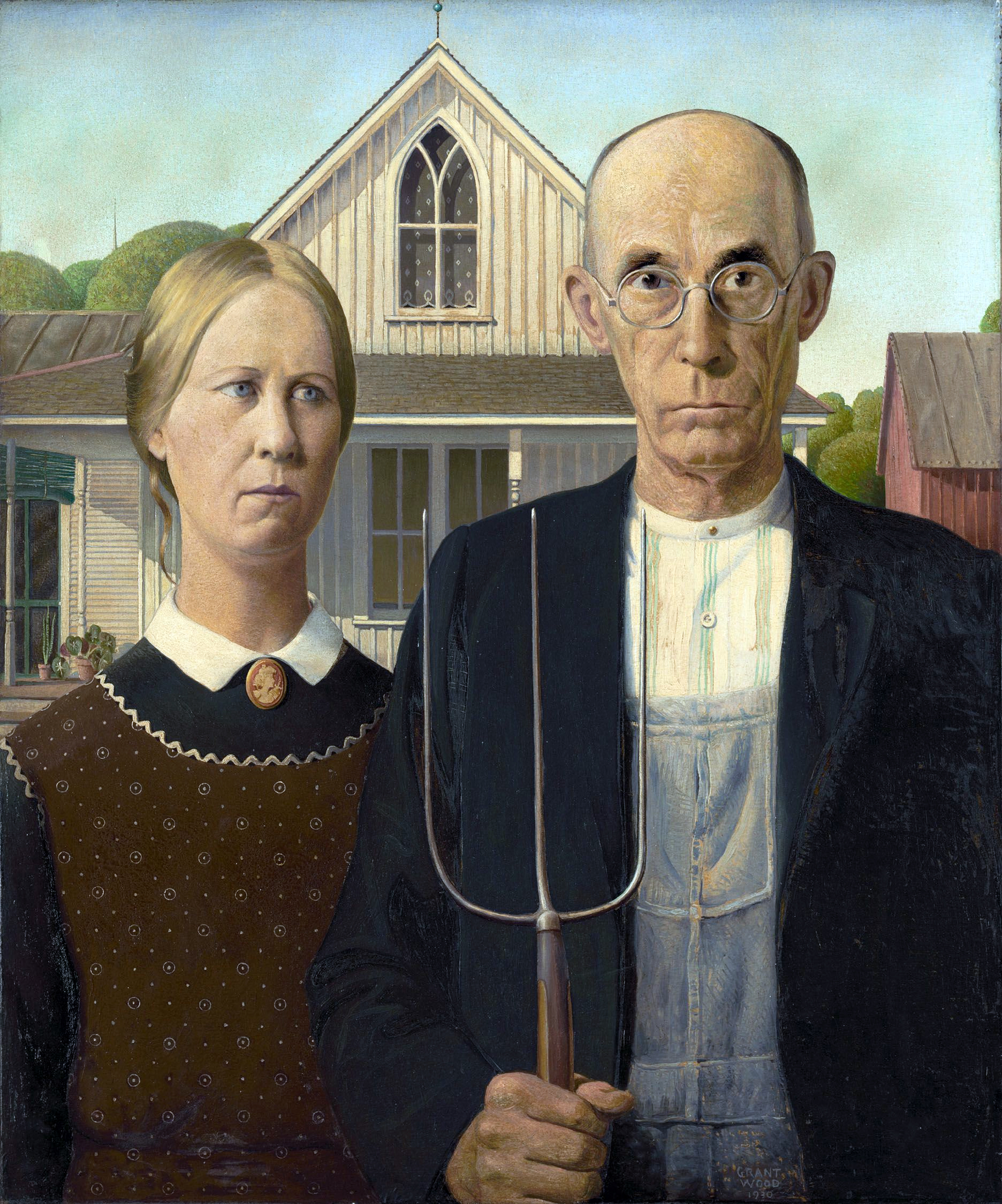
Grant Wood's most famous painting, "American Gothic"

Other articles that were tangentially related to coming-of-age included “Vassar: A Bright Jewel in U.S. Educational Diadem” which dealt with the typical life of a student at an all girls college, “Grant Wood's Latest Landscape” which talked about the influence of German art of the famous American painter during his time in Germany in WWI, “Life on the American Newsfront: the case of the child bride” which brought to light the lack of marriage laws in the midwest which allowed for premature marriages that were effectively child abuse.

Browsing the Life magazines from the 1920's and 1930's was fascinating for a variety of reasons. Usually when I read magazine I've learned to just filter out the advertisements by ignoring them. However, when reading the archived magazines, I found the advertisements to be the most entertaining part of the whole experience. It was simultaneously jarring and mesmerizing to see how these old advertisements depicted brands that are still quite popular today. I definitely got more than a couple stares in the quiet section for laughing at just how politically incorrect the advertisements would be if they had been published today.

"For Digestion's Sake - Smoke Camels"


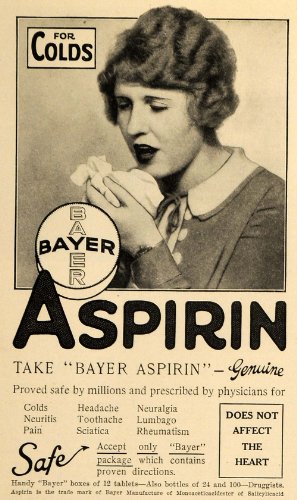
I was shocked when I saw the first of many Camel ads. Not just because such ads are illegal today, but because of how blatantly false they were. The running slogan was “For Digestion's Sake – Smoke Camels”. The advertisements for Bayer Aspirin were similarly nonfactual, claiming that two pills were a suitable cure for the common cold. And don't even get me started on the ads for home cleaning products which exclusively targeted women. The sexism in the ads were far from latent and I got a good laugh imagining how my mother would react if they made such ads today.

Bayer Cures Colds

The subject matter of some of the stories were also quite surprising. For example, there was a surprisingly in depth and “not exactly damning” look at the life of the First Lady of the Third Reich, the wife of Hitler's second in command. The world that Life magazine depicted was quite different than what I expected. With forces like Nazi Germany still at large, America wasn't portrayed as the invincible superpower it is today. Additionally, I anticipated seeing several stories about poverty or the Great Depression since the volume of Life magazines I was browsing came from 1937 yet I don't think I saw a single feature on either subject.