Surprisingly I don't think I've read a single one of the books covered in this class before. How do you make it through high school without reading The Adventures of Huckleberry Finn and To Kill a Mockingbird you may ask? I don't know. Maybe some day I'll write a step by step instructional guide. For now just sit in wonder.
2. If you have not read Huck Finn before, surely you know something about the novel and character from references and allusions in popular culture. What do you know about either the novel and/or character?
Because I hadn't read either The Adventures of Tom Sawyer or The Adventures of Huckleberry Finn, my vague understanding of Mark Twain novels prior to this class was a confusing amalgamation and bastardization of both novels. I was legitimately surprised when I had reached Chapter 10 of this novel and no one had mentioned hide nor hair of painting picket fences white.
I guess The Adventures of Tom Sawyer is more prevalent in popular culture because the two things that came to mind when I initially thought about Huck Finn were actually references to Tom Sawyer. One was this guy's face.
 |
| Jonathan Taylor Thomas played Tom Sawyer in 1995's Tom and Huck |
And the other was a joke by Daniel Tosh:
"I'm actually all for gay marriage. Just the thought of having a man around the house, means I'll actually get some work done. C'mon, we've got chores this weekend... we're painting fences...I’m dating Huck Finn in this joke. He’s a Gemini. We’re compatible."
6. Huck Finn is still one of the most controversial and most banned books in America. Why is it so controversial?
I imagine it's because it uses the n-word so much.
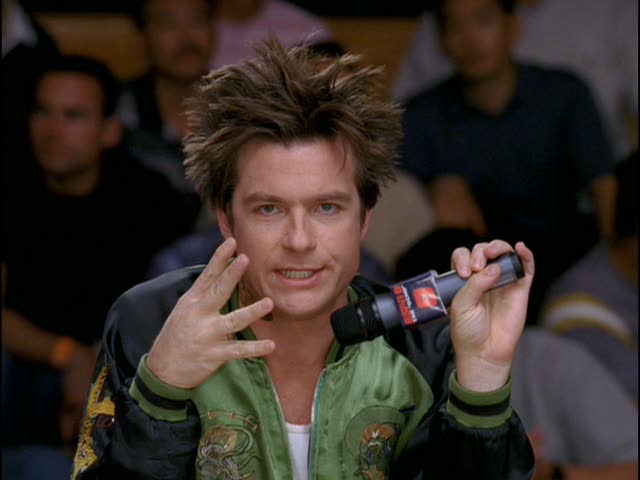 |
| Cotton McKnight: I'm being told that Mark Twain will be using the n-word 219 times in his novel. Pepper Brooks: It's a bold strategy, Cotton. Let's see if it pays off for him. |
7. Is Huck Finn still relevant to you as a college student today? Should it continue to be taught in college classrooms?
Definitely. While slavery isn't exactly a contemporary issue, I think slavery in the novel is merely the lens through which Twain explores greater thematic issues such as freedom, humanity, conscience, etc. I found reading the book to be a particularly eye-opening experience.
8. The general consensus among critics is that Huck Finn is a brilliant and powerful novel, but also a flawed and problematic novel. What do you think might be flawed and/or problematic about the novel?
I like to think that I answered this question in longer form with my previous blog, but I'll summarize my views here. I think the fact that the novel was written in a piecemeal fashion really hurts its impact. You definitely feel the division between the three basic parts of the novel, and the final product feels disjointed. The novel's ending is also a major weak point. It's problematic because it not only shifts the focus to Tom Sawyer and his elaborately wacky antics that become tiresome, but it also puts Jim and Huck on the backburner and serves to negate the importance of their adventure for freedom and their character growth as well.
EMERGENCY CUTENESS BELOW


No comments:
Post a Comment