On February 8th I went to
the TCU library and browsed a volume of Life magazines that spanned
from January to March of 1937 in search of articles or features with
a coming-of-age theme. Given the content of Life magazine at the
time, (several short stories with lots of black-and-white photographs
place throughout) I found many stories dealing with America's youth
during 1937 as opposed to one full-length feature with a
coming-of-age theme.
“Margaret Sanger Birth Control”
from the January 11th issue of Life dissected the life of
the titular woman who fought her whole life for the availability of
contraceptives from the time she was a young woman. According to the
article, Sanger was propelled to fight for the cause of birth control
after losing a friend (I believe) who died after a botched $5
abortion that resulted from the unavailability of contraception.
“Boy & Girl Nurses for Communist
Soldiers” from the January 25th issue discussed the
growing problem of teenagers in China being trained, however poorly,
to serve as medical professionals for communist rebels under
extremely difficult conditions that often left them victim to disease
and traumatization.
Other articles that were tangentially related to coming-of-age included “Vassar: A Bright Jewel in U.S. Educational Diadem” which dealt with the typical life of a student at an all girls college, “Grant Wood's Latest Landscape” which talked about the influence of German art of the famous American painter during his time in Germany in WWI, “Life on the American Newsfront: the case of the child bride” which brought to light the lack of marriage laws in the midwest which allowed for premature marriages that were effectively child abuse.
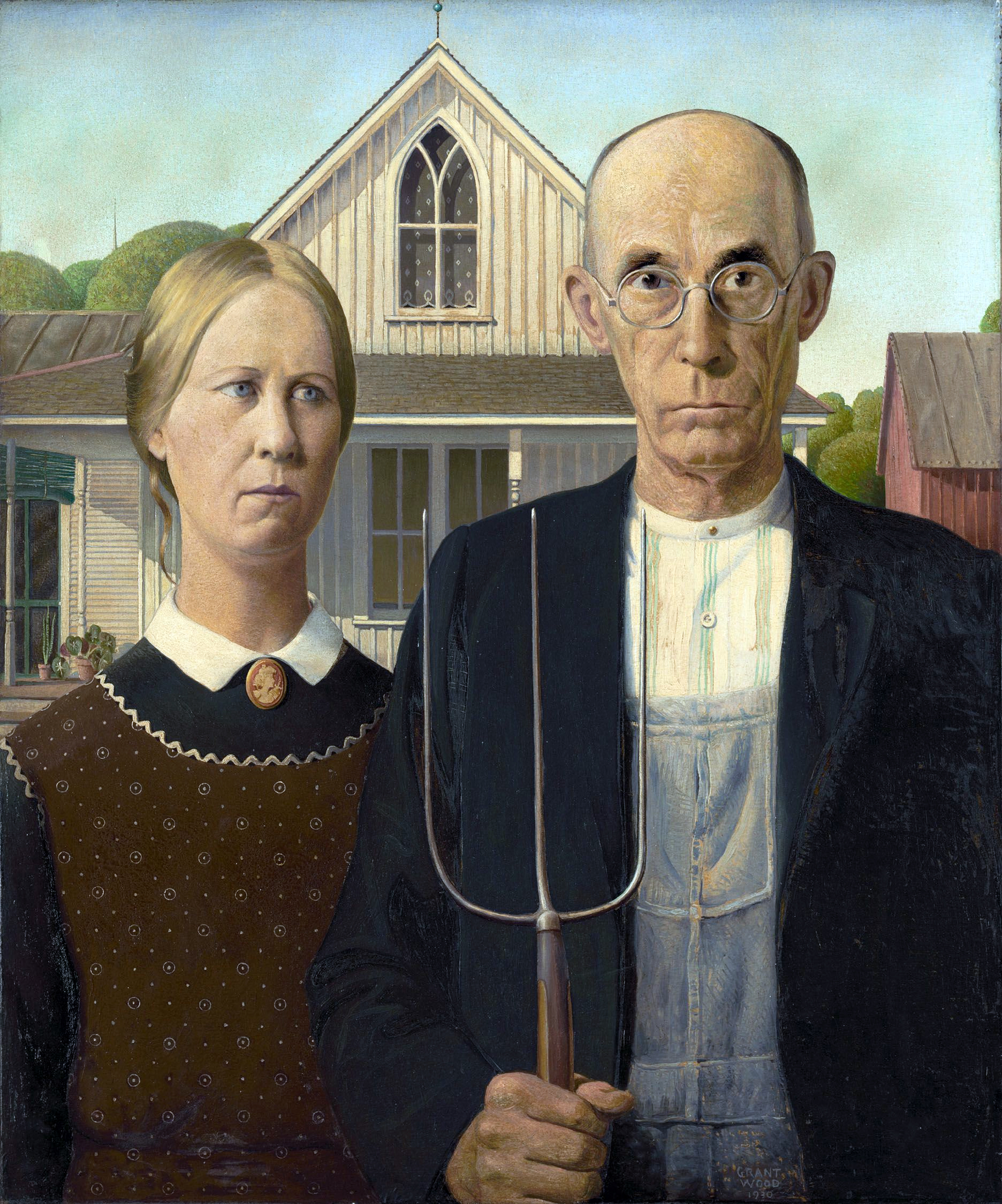 |
| Grant Wood's most famous painting, "American Gothic" |
Other articles that were tangentially related to coming-of-age included “Vassar: A Bright Jewel in U.S. Educational Diadem” which dealt with the typical life of a student at an all girls college, “Grant Wood's Latest Landscape” which talked about the influence of German art of the famous American painter during his time in Germany in WWI, “Life on the American Newsfront: the case of the child bride” which brought to light the lack of marriage laws in the midwest which allowed for premature marriages that were effectively child abuse.
Browsing the Life magazines from the 1920's and 1930's was fascinating for a variety of reasons. Usually when I read magazine I've learned to just filter out the advertisements by ignoring them. However, when reading the archived magazines, I found the advertisements to be the most entertaining part of the whole experience. It was simultaneously jarring and mesmerizing to see how these old advertisements depicted brands that are still quite popular today. I definitely got more than a couple stares in the quiet section for laughing at just how politically incorrect the advertisements would be if they had been published today.
 |
| "For Digestion's Sake - Smoke Camels" |
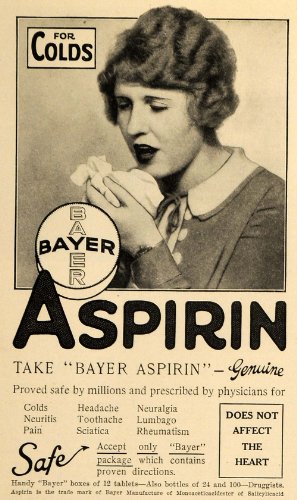 |
| Bayer Cures Colds |
The subject matter of some of the
stories were also quite surprising. For example, there was a
surprisingly in depth and “not exactly damning” look at the life
of the First Lady of the Third Reich, the wife of Hitler's second in
command. The world that Life magazine depicted was quite different
than what I expected. With forces like Nazi Germany still at large,
America wasn't portrayed as the invincible superpower it is today.
Additionally, I anticipated seeing several stories about poverty or
the Great Depression since the volume of Life magazines I was
browsing came from 1937 yet I don't think I saw a single feature on
either subject.

Hi Paul, Thanks for the interesting post on -Life-. I enjoyed your survey and images. I thought it was interesting that -Life- looked beyond the Depression in presenting life experiences. dw
ReplyDelete